

Burnaby has grown from a suburban community into one of Metro Vancouver’s densest commercial and residential markets, and its assessments reflect that shift. If you own office, retail or industrial property in Burnaby and believe the value is too high, you can challenge it through the same BC appeal process used across the province. What is specific to Burnaby is the local tax rate and the redevelopment pressure reshaping its four town centres.
How do commercial assessments work in Burnaby?
BC Assessment, not the City of Burnaby, sets the assessed value of every property in the city. Each year it estimates market value as of July 1 of the prior year, and the City then applies its tax rate to that value. An appeal challenges the value BC Assessment assigned, not the rate the City charges. The two are separate steps run by separate organizations.
Across BC, BC Assessment values about 2,233,648 properties, and roughly 99 percent of owners accept their assessment without appealing. That is a useful reality check: appeals are the exception, and for most Burnaby owners the assessment is close enough to leave alone. But commercial property is valued using the income approach, on assumed rents, vacancy and a capitalization rate, and in a city redeveloping as quickly as Burnaby those assumptions can lag what a specific building actually earns. Our guide on how BC Assessment values commercial property explains where the gaps tend to open up.
Classification also drives the bill, and it matters more than usual in Burnaby because the town centres mix uses so tightly. The Province defines the property classes that decide which rate applies: a retail or office building is usually Class 6 (Business and Other), while a warehouse or manufacturing space is Class 5 (Light Industry). A mixed-use building near a town centre can be split across classes, and if that split is wrong the property can be taxed at the wrong rate even where the total value is right. That is a separate ground from an over-valued building, and worth checking on its own.
What is driving Burnaby commercial values?
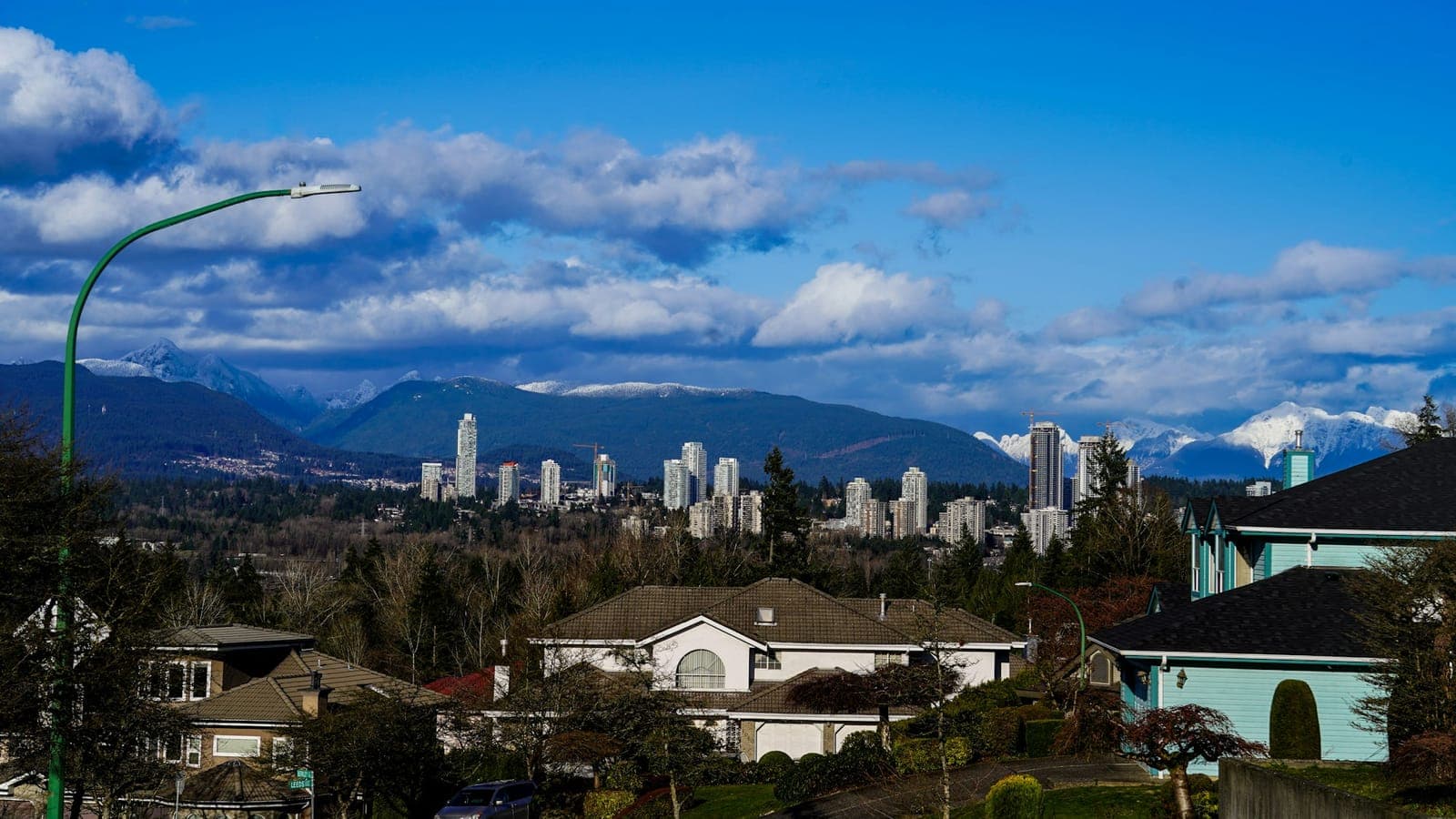
Redevelopment around the town centres is Burnaby’s defining commercial pressure. The City has concentrated growth in four centres, and their rapid transition from low-rise commercial to high-density mixed use is pushing land values up faster than the income of the buildings that stand on that land today.
The City describes Metrotown as its regional city centre and downtown, with Brentwood, Lougheed and Edmonds as municipal town centres, each offering retail, offices and SkyTrain connectivity. Around Brentwood and the Gilmore area alone, dozens of towers up to 65 storeys are planned or under construction, and the pattern repeats at Lougheed and Metrotown. For a commercial owner, the risk this creates is specific: a functioning retail plaza or older office building next to an assembled tower site can be assessed on its redevelopment potential rather than on what the current building earns. Where the zoning and timeline do not actually support that higher use yet, the assessment can run ahead of reality, which is exactly the kind of question an appeal can raise.
Burnaby also holds a substantial light-industrial base in areas like Big Bend and along the Lougheed corridor, where tight regional supply keeps values firm. There, the common issue is an older warehouse assessed against the yardstick of newer, more expensive space nearby. Testing an assessment against the building’s actual rents and condition, rather than the submarket average, is how those cases are made.
What are Burnaby’s commercial tax rates and what is a reduction worth?
Burnaby sets its municipal tax rates each year by bylaw, expressed per $1,000 of assessed value. For 2025 the Burnaby Rates Bylaw 2025 set the total municipal Business (Class 6) rate at 5.39002 and the total municipal Light Industry (Class 5) rate at 3.93549 per $1,000. Those are the City’s own levies; school tax, the regional district and other authorities are added on top, so a commercial owner’s full rate is higher than the municipal figure alone. Rates are reset each year, so for the current figures check the City of Burnaby property tax pages, which set out how the rate is built and what share goes to the City versus the Province and other authorities.
| 2025 Burnaby rate (per $1,000) | Class 5 Light Industry | Class 6 Business and Other |
|---|---|---|
| Municipal total (Schedule 1) | 3.93549 | 5.39002 |
| Regional district (Schedule 2) | 0.19720 | 0.14210 |
Those rates turn a reduction into real money. As an illustration of the method, take a Class 6 business property and assume an appeal lowers its assessed value by $1,000,000. At the 2025 municipal rate of 5.39002 per $1,000, that reduction removes roughly $5,390 of municipal tax in one year, and more once the school and regional levies on top are counted. The figure is arithmetic applied to a hypothetical reduction, not a prediction of any outcome, but it shows the leverage: on a large Burnaby town-centre or industrial property, even a modest correction is worth pursuing. Because a corrected value carries forward, the benefit repeats each year the lower base holds rather than arriving once.
The size of the rate is also why commercial appeals are judged on dollars rather than headline percentages. A large town-centre property with a small over-assessment can be worth more to appeal than a small property with a large one. Our guide on whether you should appeal walks through weighing that, including the situations where the honest answer is to leave the assessment alone. Burnaby’s municipal rate sits well below neighbouring Vancouver’s, so owners with property in both can compare the local numbers in our guide to commercial appeals in Vancouver; we cover Surrey and Richmond as well.
How do you appeal a Burnaby commercial assessment?
The process is the same across British Columbia, so a Burnaby file runs through the same two levels as everywhere else. You appeal a Burnaby commercial assessment by filing a Notice of Complaint with BC Assessment by January 31, which brings your file to the Property Assessment Review Panel. Filing there is free, and most matters are settled at that level. BC Assessment sets out the required contents of a complaint and the steps that follow in its complaint guide, including its rule that a percentage change on its own is not a valid reason to request a review.
If the panel does not resolve your concern, the second level is the Property Assessment Appeal Board, and the deadline to reach it is April 30. The appeal board charges $300 per folio for a commercial or industrial property. Our guide comparing the review panel and the appeal board sets out when each level is the right one.
It is often worth contacting BC Assessment before filing, since many issues are corrected through a conversation rather than a formal complaint — and for commercial owners, the fall pre-roll review can settle a value before notices even mail. If you do go ahead, our guide on how to appeal your BC Assessment covers each step, and our guide to BC Assessment appeal deadlines gives the exact dates for the current roll. For a Burnaby commercial property, the strongest cases rest on actual rents and vacancy, comparable assessments, and any classification or redevelopment-potential error, not on the fact that the value rose.
What evidence carries a Burnaby town-centre or industrial appeal?
Burnaby’s two most common commercial issues call for two different kinds of evidence. For a building near a town centre that may be assessed on its redevelopment potential, the key is showing what the current building earns and what its zoning and timeline actually permit today. If the site is not yet zoned for the towers around it, or the redevelopment is years off, the assessment should reflect the existing use, not a future one. The rent roll, the lease terms and the current permitted use together make that argument.
For an older warehouse in Big Bend or along the Lougheed corridor, the argument is usually a uniformity and condition case: comparable assessments for similar-age industrial buildings, the building’s real rents against the newer space it is being measured against, and any condition issues that a modern facility would not have. The roll captures the property as of a fixed date each year, so an accurate record of occupancy, rent and condition as of that date is what a Burnaby industrial appeal turns on, not the headline size of the increase.
Common questions
- When is the deadline to appeal a Burnaby commercial assessment?
- January 31, the same deadline used across BC. You file a Notice of Complaint with BC Assessment to reach the Property Assessment Review Panel, and there is no fee at that level. When January 31 falls on a weekend the deadline rolls to the next business day.
- What is a Burnaby commercial assessment reduction worth?
- It depends on the class rate. For 2025 Burnaby's municipal Business (Class 6) rate was 5.39002 per $1,000 of assessed value, before school and regional charges, so a $1,000,000 assessment reduction on a Class 6 property removes roughly $5,390 of municipal tax per year, with more once the other levies are added.
- What Class 5 and Class 6 issues are common in Burnaby?
- Two recur. On Class 6 business property in the town centres, a building near a redevelopment site can be assessed on the value of its land for future towers rather than what the current building earns. On Class 5 light industry, an older warehouse can be assessed against newer, more expensive space nearby. Both are worth testing against actual income.
- Can appealing a Burnaby commercial property raise the value?
- Yes. A review panel reviews the whole assessment, so a property that is under-assessed relative to its income or comparable properties can have its value confirmed or increased. Checking the evidence before filing, rather than appealing on the size of the increase, protects against that risk.
- Do I have to attend a hearing to appeal in Burnaby?
- Usually not. Review panel sessions are held by phone or in writing, and the appeal board decides most matters on written submissions. A well-documented written case does most of the work at both levels for Burnaby properties.
- Where do I find Burnaby's current commercial tax rates?
- Burnaby sets its municipal rates each year by bylaw, and the City's property tax pages explain how the total rate is built from the municipal levy plus school, regional and other charges. Rates change every year, so use the City's current figures for the year on your notice rather than a rate from a prior year.